You wake up cold, push the lever, and the room goes dark. If you ask why does my toaster keep tripping the electricity, the fix is near. Most standard US home wall plugs just get too full, or a hot wire broke. I fixed my own dark kitchen when I learned how to find the real fault. Read on to try my safe test and get your heat back.
That Annoying Click — What’s Actually Happening?
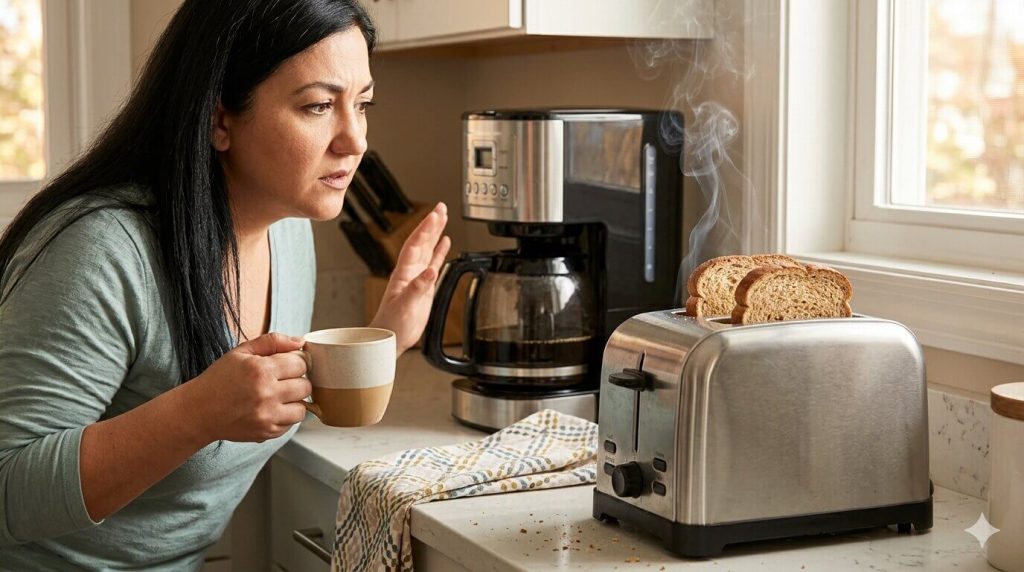
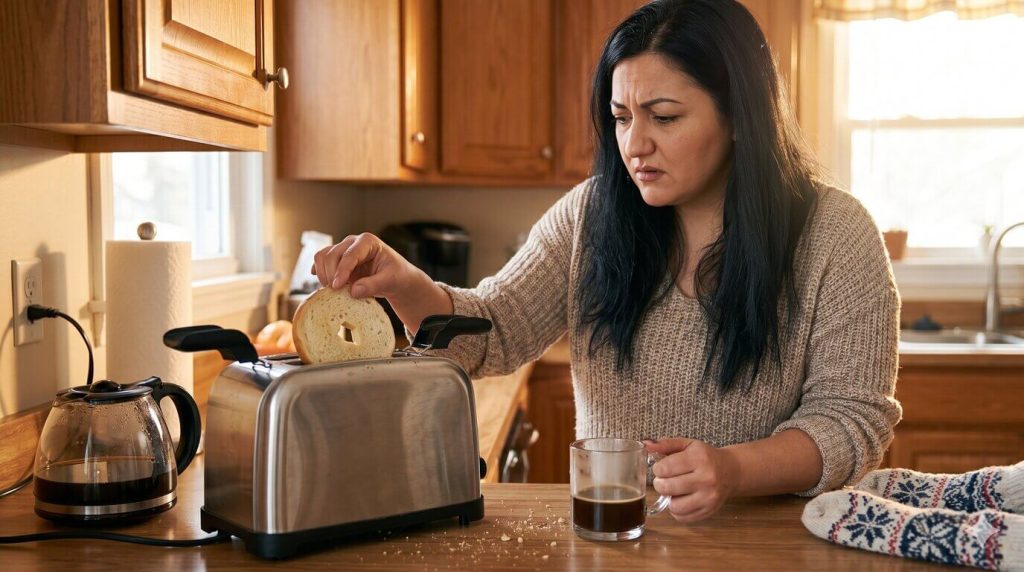
It was a freezing Tuesday morning. I stood in my kitchen in just my socks. I wanted a warm slice of bread. Just one. I pressed the toaster lever down. Then I heard it. Click. The lights went black. The hum of the fridge died. I just stood there in the dark. I felt so betrayed by my own breakfast.
If you are standing in the dark asking, “Why does my toaster keep tripping the electricity?” I feel your pain. But here is the truth. That annoying click is not random bad luck. It is your house keeping you safe.
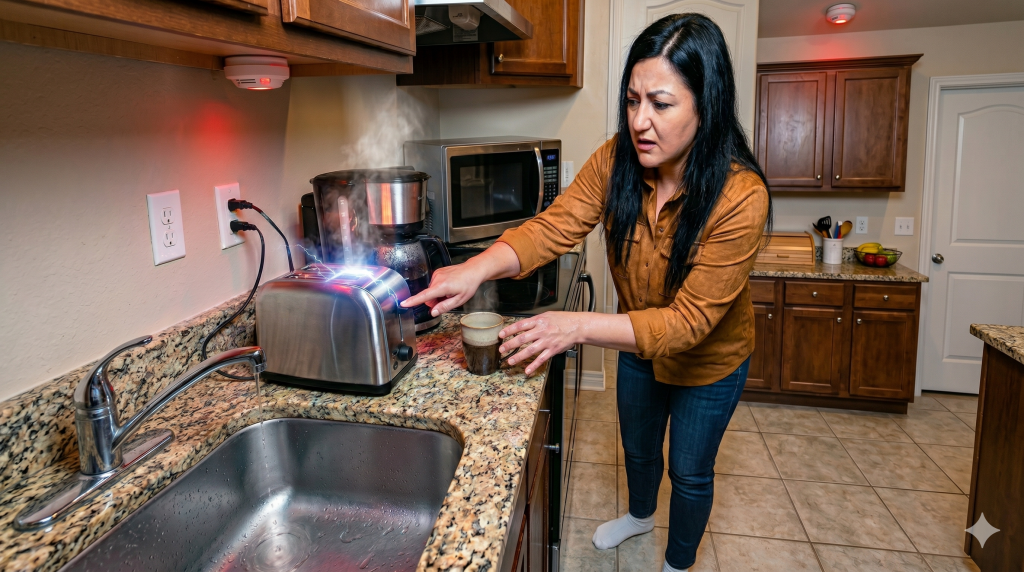
When we say a toaster is “tripping the electricity,” we just mean a safety switch flipped off. Think of it like a shield. Your electrical system senses a danger. It cuts the power instantly to stop a fire or a shock. Your toaster is not breaking your house. It is just triggering an alarm.
Not all clicks are the same, though. When I stared blindly into my own breaker box, I had to learn what was actually happening. Here is a simple breakdown of the parts that keep us safe:
| Safety Device | What It Is | Why It Shuts Power Off |
| Circuit Breaker | The traffic cop. | Too many items are running at once, or there is a short circuit. |
| Fuse | The old-school guard. | A wire inside melts to cut power when things get way too hot. |
| RCD / GFCI | The water watcher. | It feels a tiny power leak or wetness to stop you from getting a shock. |
Let us look at a real kitchen rush. You are running late. The coffee maker is brewing. The microwave is humming. Maybe your hands are still wet from rinsing a coffee mug at the sink.
You drop bread into the toaster and push the lever. Boom. Dark kitchen.
In that moment, your breaker or GFCI outlet simply said, “Stop.” It felt too much electrical load. Or, it felt moisture from your wet hands. It did not want you to get hurt. So, it shut the whole party down.
Understanding this took my panic away. The electricity is not broken. It is working exactly how it should. Now, we just need to figure out exactly what the toaster did to make the system panic.
The Most Common Reasons Your Toaster Keeps Tripping Power
Let us get practical. When I was left in the dark, questioning my life choices over a piece of bread, I needed answers. Why does my toaster keep tripping the electricity? I assumed my toaster was completely ruined. But I learned that most causes are quite boring. Better yet, they are very easy to fix. Here is what I found out.
1. Overloaded Circuit (Too Many Appliances at Once)
Toasters use a lot of power. They pull a very high wattage. Most run between 800 and 1500 watts. One busy Tuesday, I tried to boil water in my electric kettle while making my toast.
Pop. The lights died instantly.
Kitchen circuits trip first because we plug too many heavy hitters into them. My toaster plus my kettle caused a massive electrical load. It was just too much for one line.
How to fix it:
- Plug your toaster into a totally different outlet.
- Do not run the microwave, rice cooker, and toaster at the exact same time.
2. Faulty Heating Element Inside the Toaster
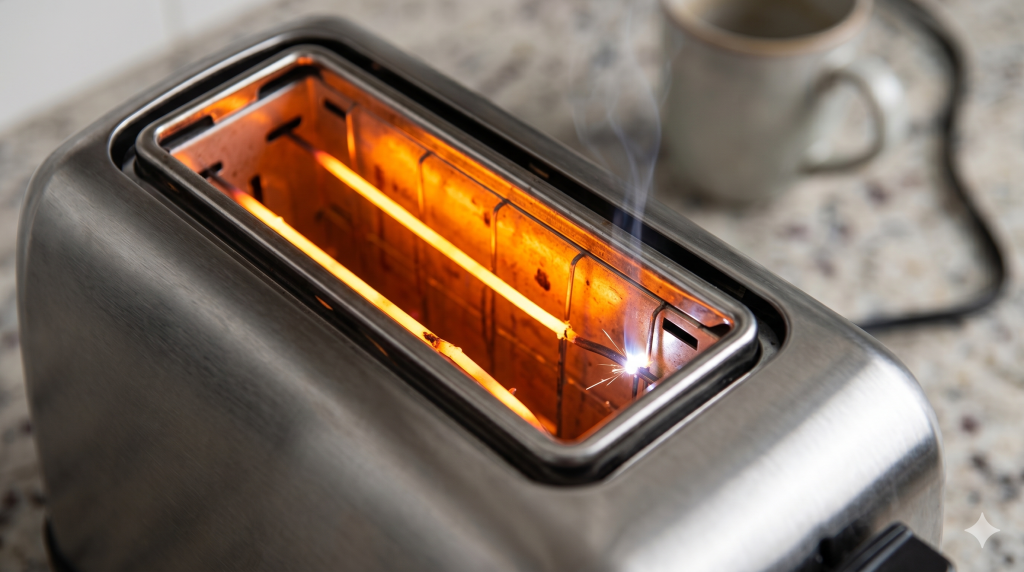
Look inside your toaster when it is on. See those bright orange wires? That is the heating element. It toasts your bread. If those wires break, they can touch the metal frame. This causes an internal short circuit. Your circuit breaker trips right away to stop a fire.
I knew mine was dying because the glow looked very uneven. Then, I caught a sharp burning smell that was definitely not bread. I also heard a faint buzzing sound. If your toaster oven trips the circuit breaker often, a bad heating element is usually the top suspect.
3. Moisture or Water Inside the Toaster
Kitchens are full of humidity and spills. One Sunday night, I wiped my toaster down with a wet rag. I wanted it to look nice. The next morning, it tripped the RCD shock protection immediately.
Moisture causes a quick power leak. The safety switch feels that tiny leak and shuts off. Even hot steam from a rice cooker running right next to your toaster can cause this.
How to fix it:
- Unplug the toaster and let it dry out for a full 24 to 48 hours.
- Never use or store your toaster right next to the wet sink.
4. Damaged Power Cord or Plug
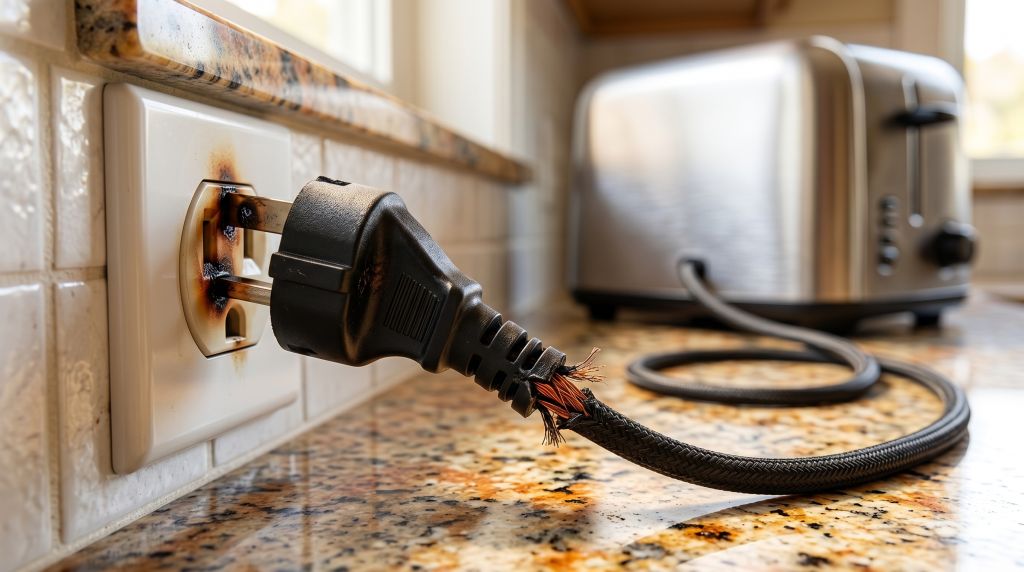
Time wears things down. Frayed wires leave raw power exposed. A loose plug can cause a dangerous spark. One morning, I grabbed my toaster plug to move it. The plug felt really warm in my hand. That is a massive red flag! Heat damage happens slowly over time.
What you need to check:
- Look closely for dark burn marks on the plug.
- Feel for a loose connection at the wall socket.
- If the plug is warm, stop using it right away.
5. Crumbs and Debris Causing Internal Shorting
We all ignore the little crumb tray. I am very guilty of this. Bread crumbs fall and build up right under the hot coils. Over time, they turn into dark carbon dust. Believe it or not, this thick carbon dust conducts electricity. It creates a sneaky short circuit inside the machine.
Right before my power died, I noticed a very specific smell. It was a mix of stale burnt toast and hot, dry dust.
How to fix it:
- Take the toaster outside and gently shake out the crumbs. Do not do this over your wet sink!
- Pull out the crumb tray and clean it every single week.
6. Faulty Circuit Breaker or Wiring Issue
Sometimes, your toaster is entirely innocent. Old houses have old wires. Sometimes, the circuit breaker itself just gets old and weak. It becomes way too sensitive.

The biggest clue? Other kitchen appliances also trip the power on that exact same wall. If your blender or coffee pot also kills the kitchen lights, your toaster is not the bad guy. You might just have a weak breaker.
Quick Summary of the Culprits:
| The Problem | How to Spot It | What to Do Next |
| Overloaded Circuit | You ran the kettle or microwave at the same time. | Use a different outlet. |
| Bad Heating Element | Uneven glow, buzzing, or burning wire smell. | Time to replace the toaster. |
| Water or Moisture | You just cleaned it, or it sits by the sink. | Let it dry for two days. |
| Crumbs & Debris | Smells like hot dust and burnt crumbs. | Shake it out outdoors. |
Why Your Toaster Oven Trips the Circuit Breaker More Often
I thought getting a nice toaster oven would be amazing. I was so wrong. Last Friday night, I was tired and hungry. I just wanted to bake a tiny frozen pizza. I watched through the glass as the cheese started bubbling. It smelled so good.
Then, snap. The whole kitchen went pitch black. I stood there in the dark, very annoyed and very hungry.
It turns out, a toaster oven trips the circuit breaker even more often than a basic slot toaster. Why does this happen? They are just bigger, hotter, and much more demanding. Here is why they fail so often.
Higher Power Consumption
Your normal toaster does a fast job. It pops your bread up in two minutes. A toaster oven works for a much longer time. It has a massive power consumption. Most of them use between 1200 and 1800 watts of raw power.
When I tried to bake my little pizza, the machine ran hot for fifteen minutes straight. That is a very heavy electrical load. The longer that huge heat stays on, the more likely the safety switch is to trip.
Shared Kitchen Circuits
Think about where your oven sits right now. Mine lives right on the main counter. It uses the exact same wall wire as my big fridge and my microwave.
These shared kitchen circuits get crowded very fast. If the heavy fridge motor kicks on while the oven is baking, the breaker panics. It says, “That is too much power for one wire!” and shuts everything down.
Internal Wear Over Time
These ovens are complex kitchen appliances. They are not just hot wires. They have tiny fans to move the air. They have sensors to read the heat. They have long metal rods inside.
All of that extreme heat breaks things down fast. Internal wear over time causes big problems. A dying fan or a cracked heating element can cause a fast short circuit. It is a sad truth, but more parts just mean more ways to fail.
Here is a quick look at why the oven is a bigger risk:
| Appliance Type | Run Time | Power Need | Risk of Tripping |
| Normal Toaster | 2 to 3 minutes | High | Moderate |
| Toaster Oven | 10 to 30 minutes | Very High | High |
Quick Troubleshooting Checklist (Do This First)
It was a slow Saturday morning. I looked at a cold, sad piece of bread. I almost called a costly pro to fix my kitchen wires. But then, I stopped myself.
If you want to know why your toaster keeps tripping the electricity, do not panic. Before you spend any money, try my simple test. It takes just five minutes. I do this every time my power dies.
Here is my personal step-by-step checklist:
- Move the plug. I took my toaster across the room. I plugged it into a totally different wall outlet. If it works there, the first outlet is the problem.
- Unplug the rest. I pulled the plugs on my coffee pot and my blender. I made sure no other kitchen appliances were stealing power at the same time.
- Check the cord. I ran my fingers over the black power cord. I looked closely for any melted spots. I also checked for a bent or loose plug.
- Dump the dirt. I pulled out the crumb tray. A huge pile of dark, dusty crumbs fell out. I cleaned the tray completely.
- Let it dry. I had wiped the toaster down the night before. So, I just let the toaster dry out on the counter for a day.
- The lamp test. I grabbed a small lamp from my desk. I plugged it into the “broken” kitchen outlet. If the lamp turns on, the outlet is fine. The toaster is the real bad guy.
Here is a fast summary of my five-minute fix:
| What I Did | Why I Did It |
| Changed the outlet | To see if the wall plug was broken. |
| Unplugged other items | To stop a heavy electrical load. |
| Checked the power cord | To look for a bad wire or hot plug. |
| Cleaned the crumb tray | To clear out dry, burnt dust. |
| Tested with a lamp | To prove the wall outlet still had power. |
When It’s Dangerous (Don’t Ignore These Signs)
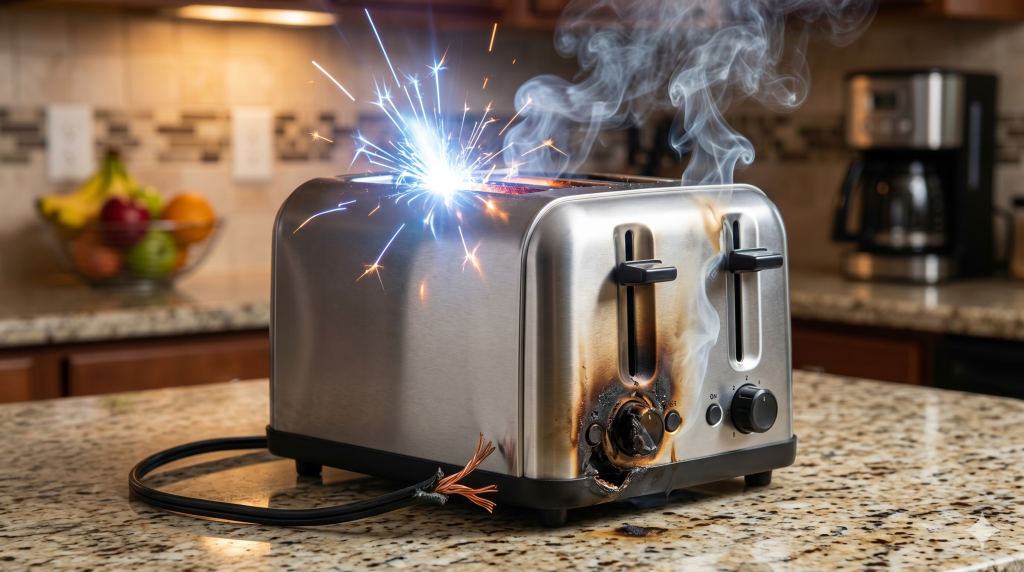
Sometimes, a broken appliance is not just a joke. It can be a real hazard. One late Wednesday night, I wanted a quick bagel. I pushed the lever down. Suddenly, I saw a bright blue spark shoot out. My heart jumped.
It did not smell like warm bread. It smelled like thick, melting plastic. I felt a very tiny zap on my fingers. I backed away slowly. That is when I knew I had to stop.
If you are still asking, “Why does my toaster keep tripping the electricity?” please listen. Sometimes you must stop trying to fix it. Do not try my simple checklist. Step back. Your electrical system is screaming at you.
If you see any of these dangerous signs, do not ignore them.
| The Warning Sign | What I Felt or Saw | What It Means |
| Bright Sparks | A sudden blue flash inside the slots. | A major short circuit is happening. |
| Melting Smell | A toxic, burning plastic scent. | Internal wires are melting. Huge fire risk. |
| Instant Trip | The breaker trips the exact second I push the lever. | A hard, critical electrical fault. |
| Damaged Cords | Bare copper wire showing on the black cord. | Exposed current. You could get burned. |
| A Tiny Zap | A sharp tingle on my hand when touching the metal. | The metal frame is live with power! |
My Honest Advice:
If you notice even one of these clues, stop using it immediately. Do not plug it back in. I unplugged my sparking toaster very carefully. I knew it was done.
Never risk a house fire or a nasty electric shock over a piece of toast. It is just not worth it. When it gets this bad, you must throw the machine away or take it to a real repair shop.
Repair or Replace? (The Honest Answer)
Let us be very practical. Last Thursday afternoon, I sat at my kitchen table. I held a small metal screwdriver in my hand. I stared at my broken toaster. I really wondered if I should try to fix it.
If you are tired of asking, “Why does my toaster keep tripping the electricity?” you will face this exact choice. Is it really worth fixing? Usually, the honest answer is no. But here is how I finally made my choice.
Repair Makes Sense If:
I will admit, throwing things away hurts. But you should only try a repair if the problem is small.
- It just needs a good cleaning. If you only need to clear out thick dust and crumbs, keep it.
- The wall plug is loose. Sometimes a loose wire in the wall outlet is the real issue. You can fix that safely.
- You own a high-end model. If you spent two hundred dollars on a fancy metal toaster, it is worth a trip to a repair shop.
Replace If:
My broken toaster was five years old. It cost me twenty dollars at a big store. Trying to fix it myself was a terrible idea.
- The heating element is dead. If those hot orange wires are cracked, the machine is completely done.
- You get repeated breaker trips. If the machine kills your power every single time, do not fight it.
- It is more than four years old. Old kitchen appliances hide a lot of heavy internal wear and tear.
I finally put my screwdriver down. I just laughed at myself. I realized my golden rule. A cheap toaster plus an electrical fault equals the trash can. Do not risk your home for cheap toast.
Here is my quick cheat sheet for making the tough choice:
| The Appliance Type | The Main Problem | My Honest Verdict |
| Expensive Toaster | Dirty inside, trips power sometimes | Repair It. |
| Cheap Plastic Toaster | Repeated breaker trips | Replace It. |
| Old Toaster Oven | Smells bad, broken heating element | Replace It. |
How to Prevent Your Toaster from Tripping Electricity Again
I really hated eating my breakfast in the dark. After I threw away my broken machine, I bought a brand new one. I sat it on the counter on a bright Saturday morning. I made a firm promise to myself right then. I would never let my kitchen go black again.
If you are tired of wondering why your toaster keeps tripping the electric, I can help you. You can avoid those sudden morning headaches. It just takes a few small changes. Here are the simple rules I follow in my house now.
- Find a dedicated outlet. I moved my toaster away from the microwave. Now, it has its very own wall plug. It does not share power. This stops the circuit breaker from getting too full.
- Keep it far from the sink. I used to leave it right next to my wet dish rack. That was a big mistake. Now, I keep it totally dry. Splashing water will cause a fast short circuit.
- Clean the crumbs every week. Every Sunday morning, I pull out the tiny crumb tray. I dump all that burnt, dry dust into the trash. The kitchen smells so much better now.
- Never use an extension cord. Cheap extension cords get hot very fast. They simply cannot handle the heavy electrical load of heating elements. I always plug my toaster straight into the wall.
- Stop the morning power rush. I no longer run the coffee maker, the kettle, and the toaster at the exact same time. I just wait two extra minutes. It stops the wires from getting overloaded.
- Replace old kitchen appliances. Do not wait for bright sparks to fly. If a machine looks worn out and smells weird, I throw it away before it breaks my power.
Changing my habits was actually very easy. It feels great to push the lever down and just smell warm bread instead of burnt plastic. Here is a quick look at how I changed my morning routine:
| My Old Bad Habit | My New Safe Habit | Why It Helps |
| Using an extension cord. | Plugging directly into the wall socket. | Stops the extra wires from melting. |
| Running everything at once. | Making coffee first, then making toast. | Lowers the massive power consumption. |
| Ignoring the crumb tray. | Dumping the crumbs every Sunday. | Stops bad smells and internal shorts. |
| Leaving it by the wet sink. | Moving it to a dry corner. | Keeps shock protection from tripping. |
A Quick Reality Check (From My Kitchen)
It always happens at the worst possible time. Picture this. It is six in the morning on a dark Monday. I am only half awake. My kitchen floor is freezing cold on my bare feet. I just want one warm piece of toast. I drop the bread in. I push the lever.
Click. Everything dies.
The coffee pot stops. The fridge goes totally silent. I just stand there in the dark. I am holding a cold jar of jam. I am questioning my whole life over a piece of bread.
If you are standing there asking, “Why does my toaster keep tripping the electricity?” I know exactly how you feel. It feels like a bad joke. But here is the hard truth.
It is rarely just bad luck. It is not a ghost in the wires. When the power drops, your machine is begging for help. It is usually one of three very real things:
- Too much power draw: You asked the wall for too much energy at once.
- An internal fault: A heating wire broke and caused a short circuit.
- Moisture or debris: Wetness or thick dust made the power leak out.
Here is a quick look at the reality of the situation:
| How It Feels in the Dark | What Is Actually Happening |
| “I just have terrible luck.” | A high electrical load is tripping the breaker. |
| “This machine hates me.” | A loose wire is causing an internal fault. |
| “It broke for no reason.” | Hidden moisture or deep crumbs caused a short. |
FAQ
Why does my toaster trip the power even when nothing else is on?
Your toaster may have an internal fault. A damaged heating element or hidden moisture can cause a short circuit, making the breaker trip even on a clean, empty circuit.
Can crumbs inside a toaster really trip the electricity?
Yes. Burnt crumbs turn into carbon, which can conduct electricity. This can create a small short circuit inside the toaster and trigger the breaker or safety switch.
Why does my toaster only trip the breaker sometimes?
It often depends on load and timing. If other appliances run or moisture is present, your toaster may push the circuit over the limit and trip it randomly.
Is it normal for a new toaster to trip the circuit breaker?
No, it is not normal. A new toaster should run cleanly. If it trips power, check the outlet or wiring first. If the issue continues, the unit may be faulty.
What should I check first when my toaster oven trips the circuit breaker?
Start simple. Check the outlet, unplug other devices, and inspect the cord. If your toaster oven still trips the breaker, it likely has an internal fault.